CASE STUDIES
.jpeg)

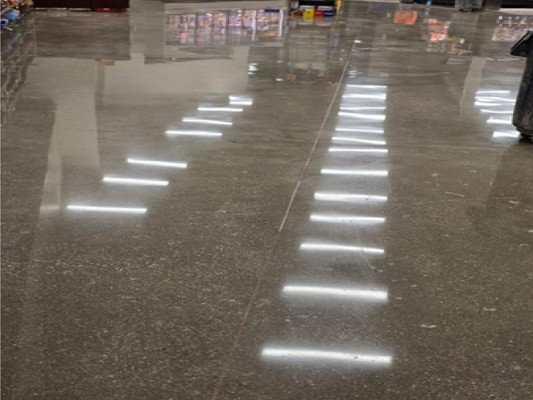

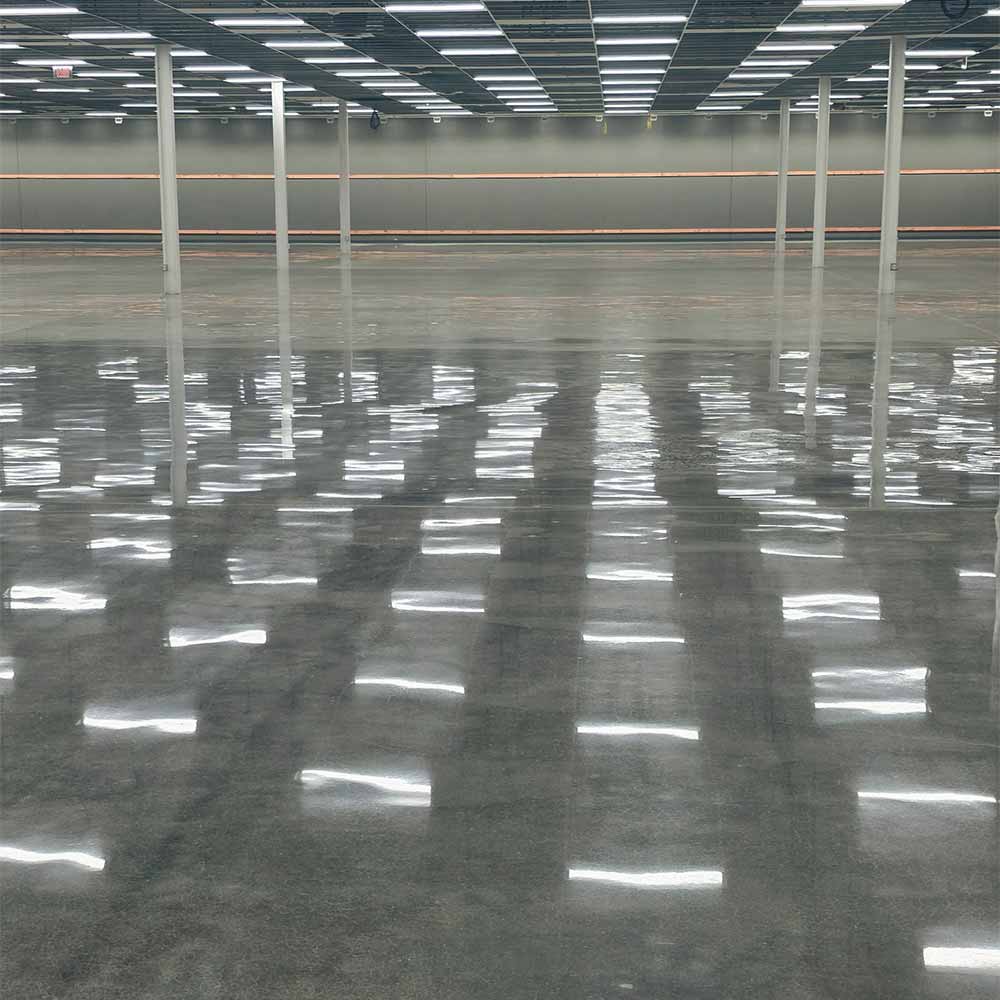
PetSmart Boynton Beach
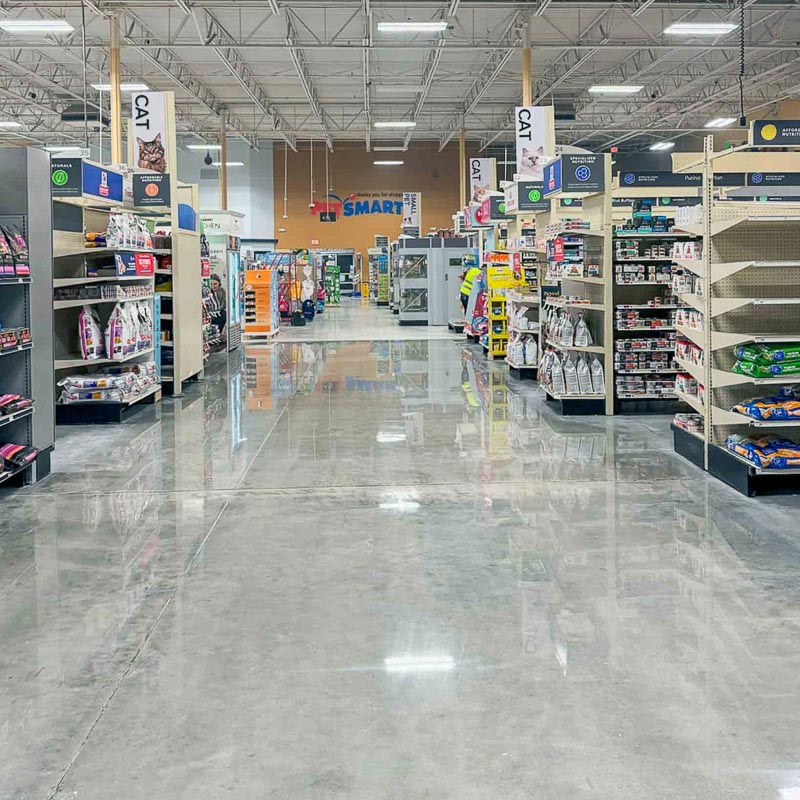
In retail renovations, success is about more than completing the work. It is about creating an experience that makes life easier for the store team while delivering results that the customers notice. That was the outcome at the PetSmart store in Boynton Beach, Florida.
A Store Remodel with High Expectations
The Boynton Beach location was part of a PetSmart corporate remodel project. The work required careful coordination, scheduling, and execution inside an active retail environment. Maintaining store operations while delivering quality flooring work meant every detail mattered. Project planning included coordination of subcontractors, equipment, site logistics, and electrical work to keep the project moving efficiently.
Overcoming Challenges Without Losing Momentum
Like many retail remodels, the project required the team to adapt to changing conditions and evolving project needs while maintaining progress and quality.
Working in an active retail environment demands flexibility, coordination, and attention to detail. The team worked through the addition of new scope, various facility-related issues, and staffing challenges. Despite these obstacles, the crew remained focused on keeping the project moving forward, minimizing disruption to store operations, and delivering the expected results.
Project updates consistently noted that the floor looked great, demonstrating the team's ability to maintain quality while conditions changed.
Results That Spoke for Themselves
The most meaningful measure of success came directly from the people working inside the store every day. After project completion, PetSmart leadership shared feedback from the store team that highlighted both the finished floor and the professionalism of the crew.
“No issues with the floors, the team was one of the best crews I’ve ever worked with, and really gave some extra TLC to our store.
Very happy with the floors, store looks new!!”
Why Projects Like This Matter
Concrete polishing and floor restoration are technical services, but projects like PetSmart Boynton Beach show that success is more than just the floor and its appearance. It is also about:
- Communicating clearly with store personnel
- Solving problems quickly when issues arise
- Minimizing disruption to daily store operations
- Maintaining quality when project conditions change
- Leaving the customer confident in the finished result
When the finished result earns the comment “store looks new,” the floor has delivered value beyond the basic scope of work.
The Result
The PetSmart Boynton Beach remodel shows what can happen when an experienced crew, strong project coordination, and attention to detail come together. The work was completed, the store was pleased with the outcome, and the crew earned some of the strongest feedback shared by PetSmart leadership.
For everyone involved, it was a project worth recognizing.
Inside the Target Fairfax Renovation: Solving Complex Challenges in an Open Store Environment
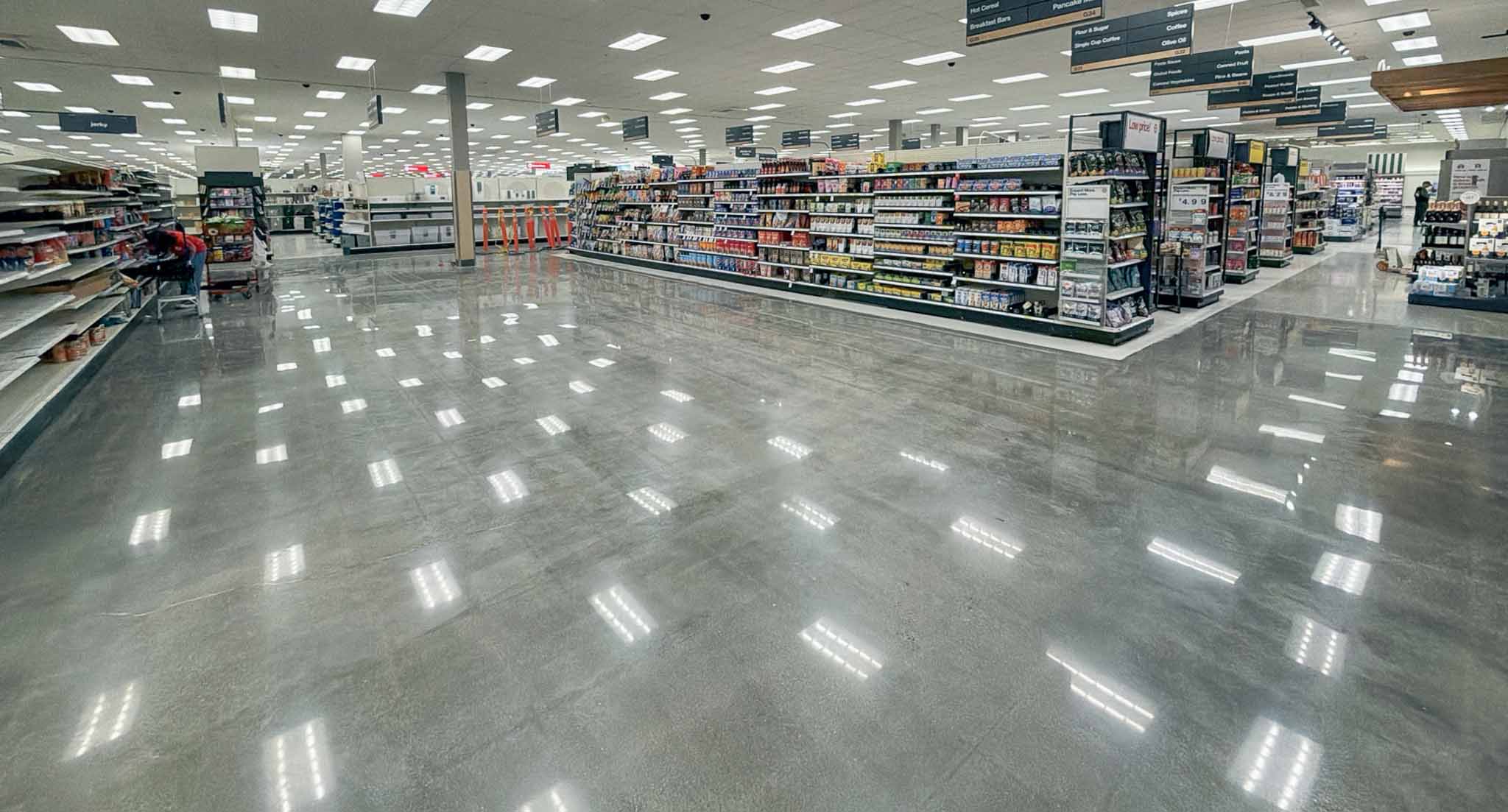
When most people will look at the finished floor inside the Target store in Fairfax, Virginia, they'll see an impressive polished concrete floor and a completed renovation. What they might not see are the weeks of planning, testing, coordination, and logistics required to make that finished product possible.
The Target Fairfax project was more than just an average concrete polishing job. It was a large-scale renovation completed inside an operating store, requiring constant coordination between L.F. Jennings, Target's reset teams, and the flooring crew. Every phase of the project had to be carefully planned to minimize disruption while maintaining quality, safety, and cleanliness throughout the renovation.
A Different Kind of Challenge
Unlike some more typical renovation projects where crews work in an empty building, Target Fairfax remained active throughout construction.
The team worked alongside Target's reset crews, coordinating work areas night after night as different sections of the store became available. Instead of simply following a schedule provided by the general contractor, success required constant coordination between the flooring team, L.F. Jennings, and Target's internal reset teams.
This created a constantly changing work environment where access, schedules, and sequencing had to be adjusted in real time.
Logistics Behind the Scenes
One of the biggest logistical challenges was the location of the work itself.
All of the work occurred on the fourth floor of a downtown Fairfax lifestyle center. Existing resilient flooring had to be removed and transported through the store, moved to elevators, and taken out to designated disposal areas.
The process sounds straightforward, but maintaining a clean operating retail environment while removing existing resilient flooring materials requires extensive planning and execution.
Throughout the project, our team successfully removed the existing resilient flooring, concrete slurry, and demolition debris without creating cleanliness issues, damaging surrounding areas, or disrupting ongoing store operations.
The finished photos show a clean, polished floor. What they do not show are the countless hours spent planning material movement, debris removal, equipment staging, and nightly cleanup procedures.
Developing a Better Process
One of the most interesting aspects of the project occurred before production really began.
The project specifications restricted the use of water during polishing operations. However, initial testing revealed that fully dry polishing would not achieve the required results that the team was looking for. Traditional wet polishing methods also presented challenges because excessive water could potentially travel across the floor and create issues on lower levels of the building.
Rather than forcing a standard approach, our team conducted mockups and tested multiple methods to determine the best solution for the project. After evaluating several options, a customized hybrid polishing process was developed.
This approach used a controlled misting application combined with a cutting agent rather than a fully wet or fully dry process. The system provided enough moisture to control dust and improve cutting performance while preventing excess water from migrating across the floor.
The result was a process that not only met the project requirements but exceeded the specified finish expectations.
Adapting to Conditions Instead of Following a Script
Every concrete slab is different.
Our team understands that specifications may be written around one project in one climate under one set of conditions. However, applying those exact procedures on a different slab in a different environment does not always produce the same results.
Rather than focusing solely on following a predetermined process, our team focused on achieving the performance and appearance required by the specification.
That meant evaluating site conditions, testing different approaches, and adapting the process to the realities of the project.
Target Fairfax became a strong example of how experience, problem-solving, and field testing can produce better results than a one-size-fits-all approach.
The Takeaway
The success of the Target Fairfax renovation was not defined by the polished floor alone.
It was defined by Perfect Polish's ability to coordinate with multiple stakeholders, manage complex logistics in an active store environment, maintain exceptional cleanliness, and develop a custom polishing process that exceeded the project's performance requirements.
The finished floor is what customers see. The planning, testing, coordination, and execution behind it are what truly made the project successful.
New Market Baptist Church Youth Center
Right here in Tennessee, Perfect Polish delivered a 9,261 SF polished concrete floor for New Market Baptist Church's new Youth Center — and found a way to tackle detailed, curved court line striping that most crews would turn away from.
As churches, schools, and community centers gear up for fall, New Market Baptist Church's new Youth Center gymnasium is ready to go — with a durable, polished concrete floor built to handle heavy year-round use. It's also a project close to home: Perfect Polish is headquartered in Norris, TN, and New Market is right in our backyard.
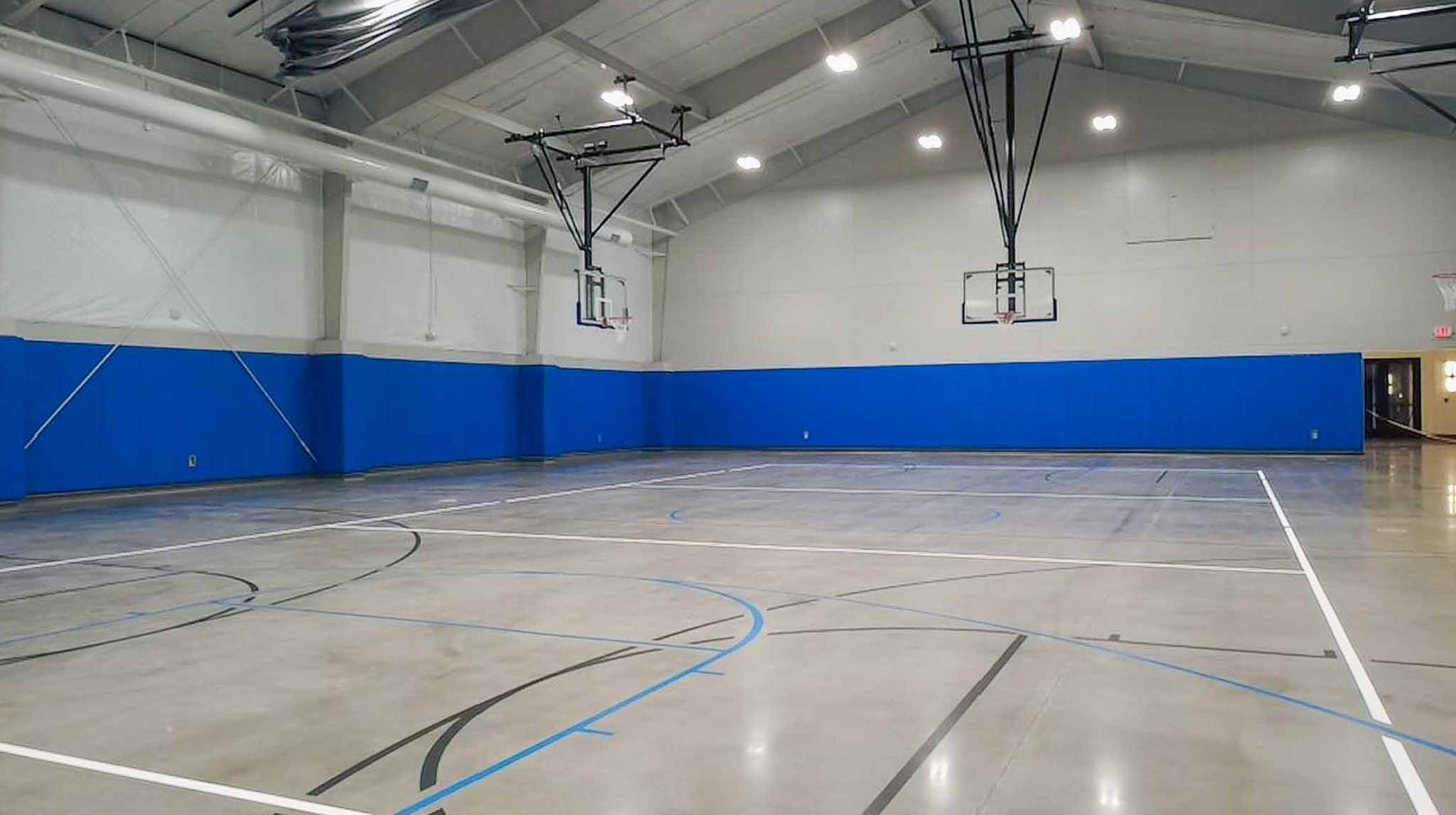
The 9,261-square-foot space was designed to serve multiple programs at once: one full-size basketball court, two smaller courts, and a dedicated pickleball court, all sharing a single slab. Perfect Polish ground and polished the entire floor to a high-quality finish and completed all of the court line striping in just 6 days, delivering a surface that's durable, low-maintenance, and ready for activity.
The Real Challenge: Striping Four Courts on One Slab
Polishing the floor was only part of the job. With four overlapping playing surfaces — including courts with curved boundary lines — laying out accurate, durable striping wasn't something a standard approach could handle.
The team first considered taping off the court lines, but quickly realized the layout called for painted striping instead. Rather than settle for a workaround, Perfect Polish partnered with Titan Guard Solutions Group, bringing in their expertise, equipment, and experience to lay out precise court lines — curves included — directly on the polished surface.
That partnership paid off: full striping for all four courts was completed in just 2 days, with clean, accurate lines ready for basketball and pickleball play alike.
"Working with Perfect Polish on this project was a great experience — the team was professional, organized, and committed to delivering a high-quality finished product...it was exciting to contribute our expertise in creating accurate basketball and pickleball court layouts on a polished concrete surface."
- Mauricio Tello (Titan Guard Solutions Group Project Manager)
The Result
Perfect Polish delivered a multi-purpose gymnasium floor that's durable, properly marked for four distinct sports, and ready for the demands of a busy youth and community facility — on a fast timeline, for a local Tennessee client.
Projects like this show why facility decision-makers trust Perfect Polish for more than just polishing: we manage the full scope, know when to bring in the right specialty partners, and find solutions for even the most detailed court layout work.
This type of multi-court gymnasium flooring is ideal for:
- Churches and community centers
- Schools and youth facilities
- Recreation centers
- Multi-purpose athletic spaces
Ready to upgrade your facility before the fall rush? Reach out to the Perfect Polish team to discuss your next polished concrete project.
Perfect Polish recently completed a 5,000 square foot floor rehabilitation project for a Mercedes-Benz dealership in Knoxville, TN, transforming a worn former paint shop into a clean, durable, high-performance workspace with a professional epoxy flake finish.
The project involved extensive surface preparation and rehabilitation work due to years of automotive paint buildup and heavy use within the space. Our team began by grinding the existing concrete surface to remove layers of old paint and contaminants that had accumulated over time. In addition, sections of existing tile were removed to properly prepare the slab for the new coating system.
Once the surface was cleaned and properly prepared, the entire floor was profiled using metal bond tooling to create the ideal surface for coating adhesion.
To help protect the floor from future moisture-related issues, a black moisture-mitigating epoxy base coat was installed across the entire slab. Decorative flake was then applied into the epoxy system, creating a floor designed for both appearance and long-term performance in a demanding automotive environment.
The floor was then finished with a durable topcoat and sealer to provide additional durability, chemical resistance, and long-term wear protection.
Despite the extensive prep and rehabilitation required, the entire project was completed over the course of a weekend and turned back over to the dealership with minimal downtime and zero disruption to business operations.
This type of rehabilitation and epoxy flake flooring system is ideal for:
- Automotive dealerships
- Paint and body shops
- Service departments
- Industrial workspaces
- Delivery bays
- Commercial facilities
At Perfect Polish, we specialize in concrete rehabilitation, epoxy flooring systems, and surface preparation solutions designed for demanding commercial and industrial environments.
Ready to upgrade your facility? Reach out to the Perfect Polish team to discuss your next concrete rehabilitation or epoxy flooring project.
Building Durable and Iconic Floors at MTSU
When you’re working in higher-education environments, performance matters. But in a flagship academic building, appearance and identity matter just as much.
That was the case for Perfect Polish at Middle Tennessee State University inside the new Applied Engineering Building — a state-of-the-art, three-story, nearly 90,000-square-foot facility designed to support hands-on engineering education, advanced labs, and collaborative learning.
From the beginning, this project wasn’t just about installing a durable floor system. It was about delivering a finish that represented MTSU correctly — right down to the color.
Collaboration to Get It Right
Some colors are just iconic.
UT orange, Ferrari red, and MTSU blue.
When institutional branding is involved, “close” isn’t good enough.
Perfect Polish worked closely with the client and the general contractor, going back and forth through samples and adjustments to dial in the exact shade needed to represent MTSU properly. Achieving the right tone required coordination, communication, and a willingness to refine the system until everyone was confident it matched the university’s identity.
That collaboration made sure that the final floor wasn’t just durable — it was true to the brand.
Starting with the Right Foundation
Before color ever came into play, the process started with proper surface preparation. Perfect Polish came in first to prepare the original concrete slab — a critical step in long-term performance.
Crews filled the joints and grounded the surface using metal-bond diamond tooling to open the slab and create the correct profile for adhesion. Once cleaned and properly prepared, the team installed a urethane mortar cement layer designed to provide a tough, resilient base capable of handling heavy institutional traffic.
After the urethane layer cured, a pigmented epoxy coating was applied, delivering a seamless, high-gloss finish in the carefully matched MTSU blue.
Built for Institutional Performance
University facilities demand flooring systems that can withstand constant use from students, faculty, equipment, and daily activity. But in prominent spaces like this, the floor also becomes part of the building’s visual identity.
By working collaboratively with the client and GC — and by handling everything from surface prep to final coating — Perfect Polish delivered a floor system that checks every box:
- Durable enough for long-term institutional use
- Seamless and easy to maintain
- High-gloss and visually impactful
- Color-matched to reflect MTSU’s identity
A Trusted Partner for Complex Projects
Institutional projects require more than technical expertise. They require communication, flexibility, and attention to detail.
This MTSU project highlights Perfect Polish’s ability to manage complex flooring systems while collaborating closely with project stakeholders to get every detail — including color — exactly right.
"With retractable windows operated by climate sensors, winding catwalks and a three-story sky garden, it's among the boldest design and engineering efforts under way nationwide."
-Lizette Wilson, San Francisco
Business Times, 12/9/06
"Most striking are its bold design and social agenda: Skip-stop elevators…and open stairs will foster interaction among employees, with the idea of creating a healthy office environment and a healthy culture."
-The Editors, Businessweek.com, 2006
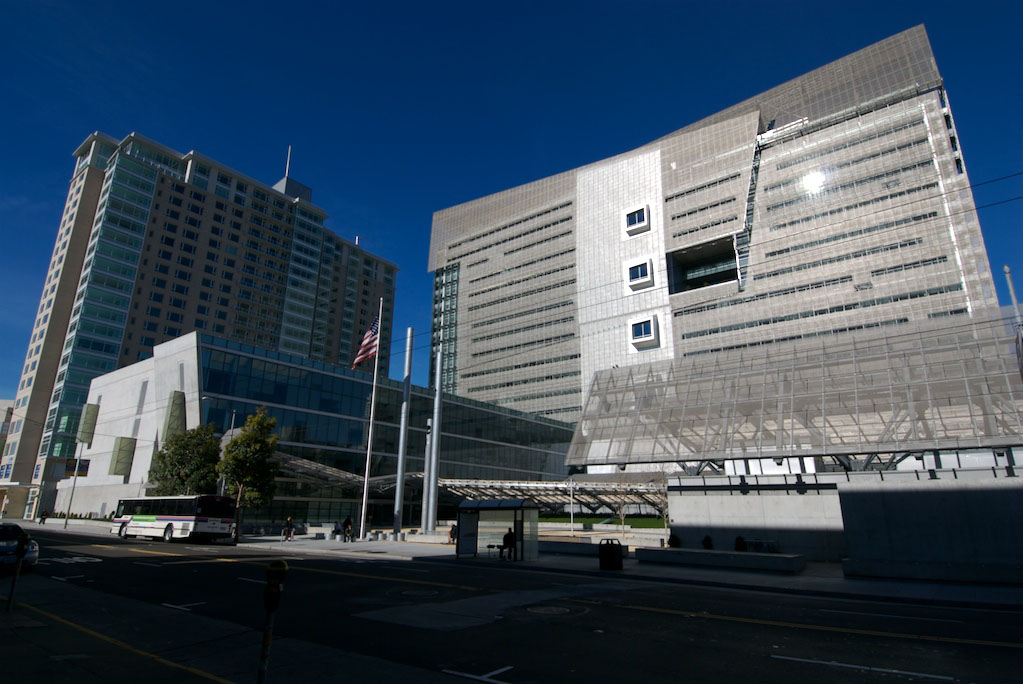
Hailed as an unprecedented landmark of achievement by the architectural community, the San Francisco Federal building rises on the city skyline as a tribute to the cutting-edge technologies of value-engineering and environmental friendliness.
The 18-story concrete structure soars with modern clean lines and sweeping glass expanses, but the façade is only a minute clue to the true triumphs of the design. A Government Services Administration (GSA) commissioned "green" building; the project was awarded to the architectural firm Morphosis under the stringent Design Excellence Program and meets the highest standards of the U.S. Green Building Council's Leadership in Energy and Environmental Design (LEEDS) program. Under the watchful eye of the GSA and the architectural community at large, the Federal Building was carefully designed and engineered to support the main LEEDS objectives and create a model work environment prototype. Towering in both size and community impact; many hope the project's innovative design will inspire other buildings in the same tradition.
Highly energy efficient and sustainable, concrete was chosen as a key construction material for the building. "What I see from the architectural point of view is that the designers are trying to show earth's raw material at its best," comments Jack Bell, Director of Operations for Perfect Polish, the Tennessee firm chosen to provide the structure's flooring application. The use of concrete throughout the structure substantially reduces energy consumption by reflecting sunlight and utilizing thermal mass for natural heating and cooling. In conjunction with a remote-controlled natural ventilation system, the concrete frame will cool 70% of the Federal Building without the aid of air-conditioning. A unique mix of nearly white cement used in exposed columns, walls and ceilings lightens the concrete to more effectively utilize natural light, potentially reducing energy usage by 50%. LEEDS dictates materials selection as a primary program tenet and concrete, with its multiple environmentally friendly and energy efficient uses, fits the bill.
Over 55,000 square feet of polished concrete flooring completes the "green" interior, adding modern allure to the space. "The floors are the unifying element reflecting the beauty [of the structure]", says Tim Christ, Morphosis principal and project manager.
The look of polished concrete floors, applied by Perfect Polish, Inc., (Norris, TN), was achieved through their dry-polish process called the Natural Wonder Floor System™, developed in 1998 by parent company Concrete Polishing Technologies. Utilizing unique diamond-leveling technology, the floors were mechanically coarse ground nearly one-quarter of an inch, eradicating all damage done to the flooring during the construction process and revealing the natural beauty of the stones already in the mix. "Problematic concrete damage from construction was mostly on the basement and ground levels," says David Padgett, Vice-President of Marketing and Business Development at Perfect Polish, and this damage posed severe aesthetic issues which were solved by the initial grinding. "In spite of the extreme abuse that the floors suffered by remaining unprotected [during construction] your team has managed to produce a very convincing product," comments Christ. The first pass also corrected construction irregularities around doors and elevator thresholds by evening adjoining surfaces. With the patches of delaminated concrete repaired, a non-VOC impregnating hardener was applied to increase density while tightening and toughening the aggregate surface. The team then performed a second fine grit diamond polishing step; this step closed any remaining pores in the floor, transforming it to a nearly impermeable surface that is highly resistant to all contaminants including oil and water. After administering a final penetrating sealant, the Natural Wonder Floor System was complete finished with a beautiful low matte sheen that seamlessly reflects contemporary style and functionality.
Value-engineering, essentially using all building materials to full potential, is a hot topic in "green" circles. Padgett explains that polishing the existing concrete value-engineers by eliminating the need to bring in a secondary floor covering, thereby saving time, reducing expense outlay and defraying total resource usage. Concerning the sustainability and durability of concrete he makes a comparison to European structures that are hundreds of years old by asking the question, "What are they built with?" The answer, of course, is mortar stone—a material used since the advent of construction—and used today in the San Francisco Federal Building.
The Natural Wonder Floor System was recommended to Morphosis by the general contractor, Dick Morganti because, as Christ relates, the sophistication of the machinery means better quality control. "It has a higher level of finish, is more durable than other flooring applications, and is more cost effective," he adds.
At a savings of over 50% per-square foot when compared to top competition terrazzo flooring, polished concrete cut Federal Building costs by roughly $750,000 initially, not to mention long-term savings. While other types of industrial flooring, including paint, acrylic, urethane, and epoxy mortar cost as much in re-service as initial investment, polished concrete refurbish rates amount to only half of the original cost. And, unlike many other flooring applications which must be meticulously maintained year after year, the Natural Wonder Floor System will need to be refinished only every four to six years—meaning further sustained cost control for client GSA. Padgett adds, "We helped the general contractor by replacing terrazzo with polished concrete in the spec and kept him from being charged twice as much." The highly price-efficient result was a durable and lovely finish of which Christ was pleased to report, "Better looking floors equal a happier client!"
Cost, however, was far from the only draw to the service of Perfect Polish, Christ cites management expertise and service as important factors. "We have been huge proponents of the approach that they used at the San Francisco Federal Building." Completing the entire 18-story, 55,000 sq. ft.+ was no small management feat, especially considering that the Perfect Polish team was coordinating with many other subcontractors. Christ praised their work saying, "Jack Bell is, in our estimation, a miracle worker." Though the non-hazardous nature of dry polishing enabled the team to work simultaneously with other tradesmen and the floors may be walking on during the polishing process, it still took a tremendous amount of planning to accomplish the task at hand. "During the work coordination effort, we created a schedule of values for every room on every floor," says Padgett. This allowed Perfect Polish to mobilize fewer times and work effectively. The installation was so clean and environmentally friendly that downtime was not required: once the Natural Wonder Floor System was complete, the area was put back into full service immediately. Impressed with both the process and outcome, Christ says, "We [Morphosis] will continue to spec polished concrete floors on any of our public jobs where the client can be made comfortable with a concrete flooring solution…[we] plan to continue recommending Perfect Polish to any architects in the US who are looking into ground, polished floors."
Padgett's remarks on the finished product include, "It's an amazing thing to see the polished floors next to all the stainless steel and glass…it looks like the future."
A bright future it will be for the soon-to-open San Francisco Federal Building. A bridge between the past and the future, the public will see a building that conjoins tradition with modernization by using timeless principles in breakthrough design. The official ribbon-cutting in early 2007 will reveal a structure that is fully integrated into the neighborhood it resides in, yet a true testament to forward thinking.

LEED HIGHLIGHTS
· Silver Certification
· Improved lighting
· No biohazard products
· Durable
· Operable Windows
· 70% natural ventilation cooling
· Computerized lighting controls
· Perforated metal sunscreens provide shading
· 50% slag-concrete mix Polished concrete flooring
Further Reading:
- Wiki: The San Francisco Federal Building
- San Fran Federal Building Highlight
- GSA Building Wins Sustainable Leadership Award
- Greener Than Thou: Federal Building Controversy
- PCA Case Study: Concrete Office Buildings
When a big retail grocery store planned a full-floor renovation at their Santa Cruz location, the expectations were straightforward: remove aging tile, grind the slab, and deliver a clean, durable 1500-grit polished concrete floor—without disrupting nightly store operations. But as is often the case in renovation work, the slab had a surprise in store.
A Project Built Around Precision and Phasing
Perfect Polish began work on September 30, executing the entire scope at night so store operations could continue seamlessly each morning. The plan included removing all existing tile, performing a complete metal grind, and bringing the floor to a high-performance 1500-grit shine before sealing and burnishing according to owner and general contractor specifications.
The team progressed deliberately across the sales floor, phasing areas to maintain accessibility, visibility, and customer safety. Tile removal moved quickly, with the entire floor cleared by October 7—well within schedule.
The Hidden Challenge: A Koster Seal
As the first sections of tile came up, crews uncovered an unexpected obstacle: a Koster seal covering the slab. This type of coating is notoriously difficult to cut through using standard 30/40 metal-bond tooling, and its presence had the potential to slow production significantly.
Perfect Polish responded immediately. The ownership team and general contractor were notified the same day, followed by an onsite walkthrough within the first week. After evaluating the entire slab condition, the teams approved a change order authorizing an aggressive grind to break through the Koster layer and restore production pace.
A High-Performance Result
With the corrected grinding plan in place, progress accelerated. The polishing phase averaged roughly 2,000 square feet per night, with the full polish cycle completed in approximately 21 days.
By project completion, Perfect Polish delivered a consistent, durable 1500-grit finish across the entire sales floor. The team closed out the project with no deficiencies, and both the general contractor and store management expressed high satisfaction with the final appearance and performance of the polished floor.
The hidden Koster seal, added repairs, and the constraints of overnight work in an active retail environment presented multiple hurdles—but none that disrupted the project’s momentum. Through rapid communication, technical adaptability, and disciplined nightly production, Perfect Polish met the owner's expectations and turned over a clean, high-gloss polished concrete system built to withstand long-term commercial traffic.
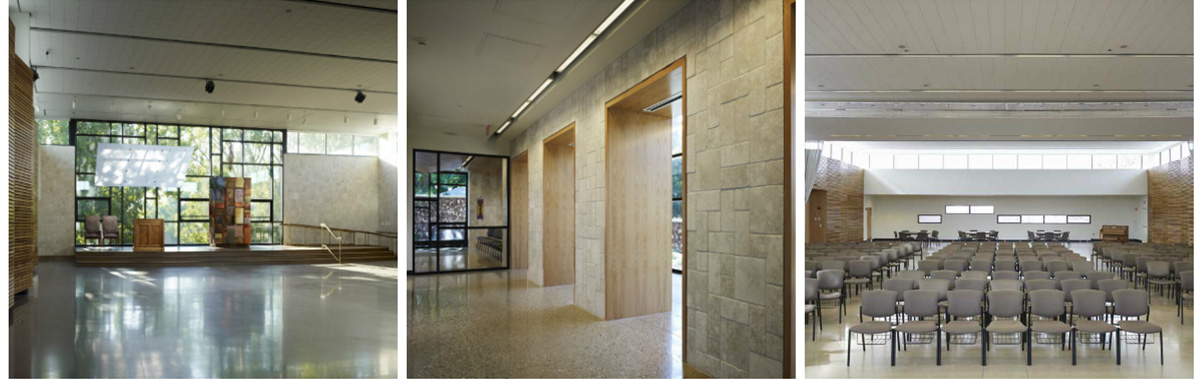
Environmental sustainability has long followed the ancient Jewish values of Bal Tashchit, the principal laws prohibiting waste and destruction. With the large-scale construction project for the JRC synagogue, this meant incorporating the design principals set out by the USGBC LEED rating system. The goal: to become the first Gold Certified LEED synagogue in the world.
The LEED (Leadership in Energy and Environmental Design) certification is based on a rating system which awards points in five key categories: sustainable site development, water savings, materials selection, indoor environmental quality, and energy efficiency. Certification is awarded as Platinum, Gold, Silver, and Certified.
Creative reuse of materials was incorporated to ensure that the project stayed on track with Bal Tashchit values. A tree, which had to be removed from the site prior to construction, was milled to become a ceremonial door. The demolition of the façade from the old building was crushed and used as backfill for the foundation of the site. All of the building’s exterior was crafted from reclaimed cypress so no new tress had to be harvested.
The remaining building materials were also scrutinized to ensure that they contained a high volume of recycled content. From the steel used to build the structure to the fly ash included in the concrete pour, salvaged, reused, and renewable resources were incorporated into every material choice.
The choice for polished concrete as the flooring choice was an easy one, as it offers reuse of building materials, reflectivity which supplements the lighting required, requires very little maintenance, and does not contribute VOCs.
“Polished concrete was chosen because of the indoor air quality. It contributed no VOCs.” Drew Walters with Bulley Andrews General Contracting mentions.
“Polished concrete is unique as a flooring alterative,” says Erin O’Brien of Perfect Polish. “The slab is an essential element to all construction projects. Polishing the exposed concrete to create a desirable finish is one of the least resource-demanding systems out there and helps to dematerialize the project.”
The project was not without its complications, as was soon discovered when the operating team of Perfect Polish got on the scene. “We thought [the concrete floors] were flat and smooth, but when the grinders got on them, it was a different story. There were a lot of dips and crevices,” Andrews explains.
The scope of work was specified as a light grind (cream finish), with an 800 grit sheen level, (Natural Wonder Level 3).
“We wanted to make sure the architect and owners were happy with the results, so we incorporated additional grind steps to achieve a more consistent look,” describes O’Brien. Andrews elaborates, “The [polished] concrete guys put a lot of effort into it.”
The three story building ended up with different aggregates exposures on the floors due to the additional grind steps, but the final sheen was exactly what the owners desired – a highly reflective surface.
The project has not yet been awarded its LEED Certification, but regardless of its final rating, Gold or otherwise, the owners of the JRC Synagogue have created construction that minimizes its impact on the earth through sustainable design.
LEED Highlights:
- Gold Certified
- Optimized daylight with a multitude of windows
- A white, reflective roof
- HVAC programmed into zones
- Salvaged and renewable building materials
- High recycled content in building materials
Polished concrete flooring
Further Readings:
Fort Meade Army-Air Force Exchange
Anne Arundel County, Maryland
By Stacey Enesey Klemenc
It was not your best-case scenario.
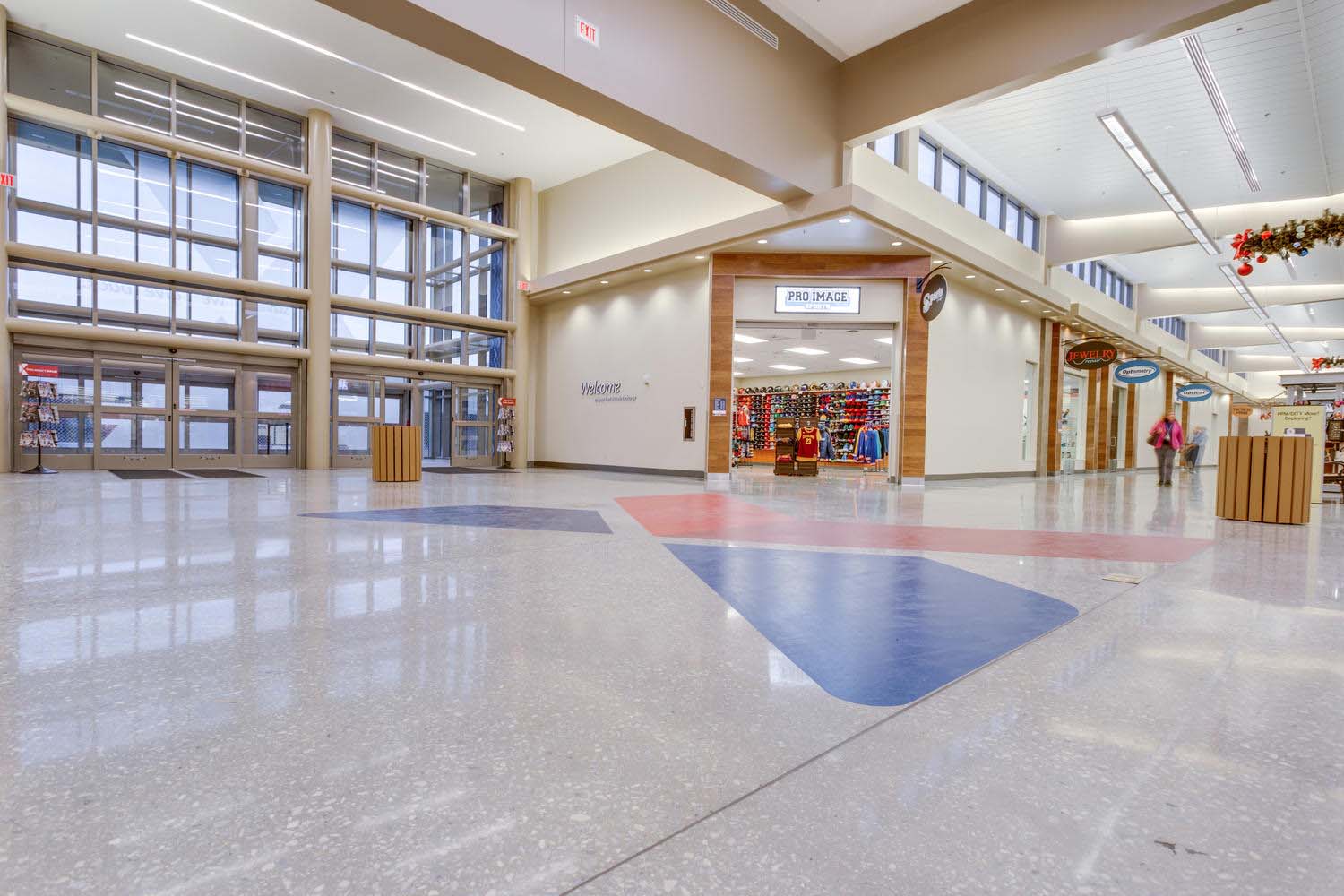
A new Army/Air Force main exchange, an indoor mall with multiple vendors and a food court, was slated to open at Fort George G. Meade in Anne Arundel County, Maryland, in six weeks. The floor had been ground and polished, the racks staged and the food vendors’ equipment installed.
Problem was, as soon as the floor was cleaned of all the construction debris in preparation for workers to start moving heavy equipment across the exchange’s shiny new 110,000-square-foot floor, a large amount of “craze cracking” became apparent. This type of cracking is caused by rapid shrinkage of the surface, forming crack patterns across it that looked like spider
webs. While all concrete cracks this way to some extent, these cracks were larger. This was a potential indication of a much larger problem where delamination was occurring at the surface of the slab.
The Army-Air Force Exchange Service project manager called David Stephenson of Polished Concrete Consultants in Dallas, Texas, to assess the situation. Stephenson found the problem was not confined to just a few places; it was widespread. The paste cap was separating from the body of the concrete below.
“It appeared that bleedwater was trapped at the surface by the finishing process,” says Stephenson. “This created ‘blisters’ just below the troweled concrete paste layer which is between 1/8 and 1/2 of an inch below the surface. As we reviewed the project, we found thousands of delaminations ranging in size from 10-feet square to just a few inches in diameter.”
“If you dragged a chain or steel rod across the floor, you could hear that it was hollow underneath,” says Brad Padgett, president of Norris, Tennessee-headquartered Perfect Polish, one of the largest contractors in the U.S. that specializes in polished concrete.
“The average depth where the separation occurred was 1/8 inch under the paste cap.” To remediate the problem, his company was hired to remove the entire paste cap and get below these hollow spots before taking the floor up to a 1,500-grit shine. And they only had six weeks to accomplish the task.
Tons of Work
For starters, Perfect Polish had to remove the cap with such finesse it didn’t damage the concrete its crews were then going to polish. “We didn’t want to fracture the aggregate or pull it out of the floor,” says Padgett, so big equipment wasn’t an option.
He decided to first use BMC 335s, milling machines from Diamatic that employ 70 to 80 12-inch saw blades stacked side by side, to cut the floor. “They leave a very smooth profile that resembles corduroy,” he explains, with slim high spots and about a 1/8-inch gap between blade cuts. While some areas of the floor required only one pass, the bulk of it required multiple passes to expose aggregate from 1/4 to 3/4 inch in size.
Padgett says they had three roto-millers running two 10-hour shifts each day with between 11 and 14 men per shift. “We removed 50 tons of concrete off this floor,” he says, filling up a full-size construction dumpster every 24 hours.
After the floor was roto-milled, the crews switched to large floor grinders from Concrete Polishing Solutions equipped with metal-bond diamonds to smooth the corduroy profile. With a fleet of eight G-320D propane planetary grinders hooked up to CPS dust extractors to keep the airborne dust in check, they ground the floor with 16-, 40-, 80- and 150-metal-bond diamonds. They then densified the floor with Consolideck LS by Prosoco before polishing it with Sektor pads, a brand-new technology from CPS.
“CPS provided us with 100, 200, 400, 800 and 1,500 resin-bonded diamonds,” Padgett says. “It was the first project this size these (flexible resin-bond diamonds) had been used on. It made a huge difference in speeding up production. Because of them, we were able to hit the very aggressive schedule we’d been given.”
Perfect Polish then sealed the floor with Consolideck LSGuard from Prosoco before embarking on the final step, a high-speed burnish with 3,000-grit Spinflex diamond pads.
No Shortage of Challenges
The timeframe the company had, from bidding to commencing work, was somewhere between 10 days and two weeks, which isn’t a lot of time to pull together all the needed resources and report for work, Padgett says. Add into that mix the hassle of getting 30-some men through the military security clearance rigmarole so they could get on base. “It was a very stringent background check,” he says, and a major hurdle to clear.
Once they got there, they had six weeks to remove 1/8 to 1/4 inch off the top of the 110,000-square-foot floor and bring the floor up to a beautiful polish. “Working inside a finished building with a very elaborate roof and lighting system was a challenge from the very beginning,” Padgett says. “We had plastic hung across everything and were basically in a plastic cocoon the entire time we were working to keep the dust from getting on the fixtures, the windows, the painted walls.”
To keep the lines of communication flowing between the crews that worked the day and night shifts, a 20-minute safety and communication meeting was held each day when the shifts turned over. “This way, the incoming crew could pick up where the previous crew left off without having confusion,” Padgett says. And, he’s proud to report, “We had zero safety issues on this project.”
As a quality control measure to ensure they removed a minimum of 1/8 inch from the surface, Perfect Polish ran east to west saw cuts every 30 feet. “We used a micrometer to make sure we had the depth of the saw cuts right,” Padgett says, and spray painted the grooves in the floor with white paint. The crew then ground in a north to south pattern. “Once we had ground through the spray paint we knew we had ground enough off and could start the polishing process,” Padgett says. Without the spray painted guide lines, he adds, “Trying to determine when we had ground off 1/8 inch could have been really tricky.”
Project at a Glance
Client: Army-Air Force Exchange Services
Project: Main exchange at Fort Meade in Anne Arundel County, Maryland
General contractor: Walbridge Construction
Polishing contractor No. 2: Perfect Polish in Norris, Tennessee
www.perfectpolishconcrete.com
Consultant: David Stephenson of Polished Concrete Consultants, Dallas, Texas
www.polishedconsultants.com
Project Description: A 110,000-square-foot floor was poured and polished prior to Perfect Polish’s involvement with the project. The company was hired to fix a problem with the paste cap separating from the body of concrete.
Products used: Consolideck LS densifier and LSGuard sealer by Prosoco; Spal-Pro RS 65 joint sealer in Porpoise Gray by Metzger/McGuire; Spall TX3 grout coat by Hi-Tech Systems; and Concrete Polishing Solutions’ Red Shark edge grinding discs, Speedline edge polishing pads, HFL metal bonds, T3 transitional diamonds, Sektor polishing pads and Spinflex diamond burnishing pads.
Overlooking the many bright scholars to enter its bronze doors stands an architectural haven: UC Berkeley's C.V. Starr East Asian Library. The building contains four floors dedicated to housing an invaluable collection of over 900,000 East Asian works. The building was designed with a unique goal to utilize building materials that not only add visual interest, but also help preserve the irreplaceable documents, art, and books.
UC Berkeley, already a recognized world leader for educational excellence, also leads the country in environmental stewardship for campus design. Since 2002 the campus has aimed to make its buildings as "green" and environmentally conservative as possible. The institution set a lofty goal of reaching a minimum LEED Silver Certification level on all new construction projects, which requires a building to gain between 33 and 38 LEED points. In 2004, Berkeley further refined its environmental initiative by creating the 2020 Long Range Development Plan which serves to minimize Berkeley's environmental impact while supporting campus growth and maintaining an environment conducive to academic excellence. The C.V. Starr East Asian Library was the first project proposed under the plan.
With such an overwhelmingly "green" model already set, the design team of the C.V. Starr East Asian Library, award winning firm Tod Williams Billie Tsien Architects (TWBTA), had their work cut out for them. During the planning stage of the construction, careful consideration was used to select specific materials that would conserve energy, minimize VOC's (volatile organic chemicals), and encourage recycling, while still providing aesthetic appeal and protecting the work held within. Dramatic patterned glass windows were chosen to provide filtered daylight and interior lighting. Native plants were selected for landscaping and are nourished from reclaimed water captured from a stone basin.
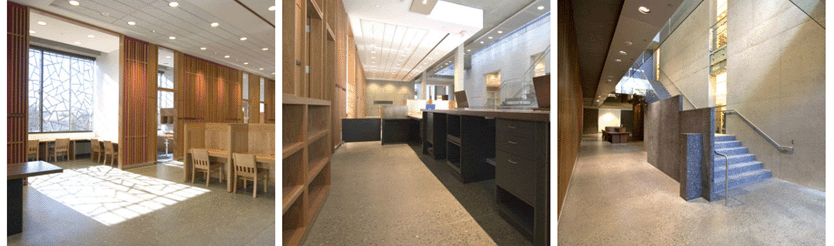
In the heart of the 68,000 square foot building lay over 25,000 square feet of polished concrete. The use of polished concrete maintains the traditional exposed concrete aesthetic that is used throughout the campus and provides a sustainable flooring alternative. "Using polished concrete on the floor eliminates the need for additional coating or covering for the floor," explains Erin O'Brien, Senior Sales Consultant for Perfect Polish. "It will reduce the impact on the environment that harvesting and transporting would require to bring in carpet or tile, making it an intrinsically green flooring option."
The properties within concrete allow the temperature in a building to remain consistent, without consuming excessive energy for cooling and heating. That means that utilizing exposed concrete also helps to maintain the cool temperatures required to preserve the 900,000 volumes of East Asian tomes. To further enhance the thermal mass properties of the concrete, the architects used passive solar design principles and installed exterior screens to filter more than half of the sunlight from streaming directly into the building.
Constructing the concrete floor did not come without its challenges, but Perfect Polish, one of the largest polishing firms in the nation, sent out experienced crews capable of handling such challenges. The concrete floor of the library had special dips poured into the concrete to accommodate moveable bookcases. This required the Perfect Polish crew to hand tool all of the linear footage in that area. With numerous bookcases, metal structures, and other essential fixtures, the floor plan was not wide open, and this slowed production slightly.
"Our crews are IPCI Certified and highly trained to be able to adapt to any construction environment," elaborates O'Brien. "Our goal was to provide the sustainable flooring vision of the architect, regardless of what we encountered."
And meet that vision they did. The C.V. Starr East Asian Library combines both aesthetic and sustainable design. The final floor exposed large black stone throughout the building, and the matte sheen left a subtle, but remarkable flooring element that will be appreciated by scholars throughout the years.
LEED HIGHLIGHTS
· Silver Certification
· Renewable bamboo flooring
· Motion-sensor operated lights
· Optimized daylight using skylights
· Exterior screens to filter 50% of direct sunlight
· Native landscaping
· Reclaimed storm water basin
· Polished concrete flooring
Further Reading:
- Berkeley Campus & Environmental Design
- Berkeley Issues Environmental Commitment
- Institute of East Asian Studies Home
- Asian Library is Among Best New Buildings
- Berkeley releases Long Range Development Plan
Achieving the project’s dual goals of flowing seamlessly into the surrounding park landscape and showcasing sustainable building design worthy of an organization dedicated to protecting the earth’s natural beauty called for a collaborative effort between Pritzker Prize-winning architect Renzo Piano, Chong Partners and the Renzo Piano Building Workshop. Combining forces to create an integrative structure for the landmark natural history museum, architects, engineers and designers worked together to renovate and reconstruct the Academy of Sciences into a unified, green restoration.
The Academy of Sciences is expected to capture the U.S. Green Building Council’s coveted Platinum LEED certification—and be the largest public space yet to earn the honor. Attaining Platinum certification requires close attention to every detail of the design and construction process, and materials selection is one of the key elements judged for LEED points. The use of polished concrete flooring aides in LEED certification because, by eliminating the need for potentially corruptive applications such as carpets or tiles, it improves indoor air quality. The lack of adhesives and VOC equals better indoor air quality. Drew Walters of general contractor Bulley and Andrews, a company familiar with concrete polishing says, “Polished concrete does not have the VOC organic content that causes the new building scent. From a VOC standpoint there aren’t as many compounds in the air, which helps with LEED certification.” According to An Engineer’s Guide to Building Green with Concrete, “The U.S. government is adopting green building programs… many agencies are requiring LEED silver certification as a minimum… Concrete can be used in conjunction with the LEED program to earn certification.”
Polished concrete flooring was chosen for the Academy of Sciences to support environmental responsibility, LEED certification, and to fulfill the vision of architect Renzo Piano. Notably gracing the Academy’s central museum space, African Hall, and paving passageways and exhibit areas, the small-aggregate salt-and-pepper polished concrete was carefully considered for sustainability, environmental friendliness, and aesthetic impact. The 180,000 sq. ft. of polished concrete flooring served to keep the project’s environmental impact low while retaining architectural ideals. Jon McNeal, a member of the thirty-person architecture team, explains the choice: “[The architectural] mandate to take the most sustainable route in materials made concrete the right fit for us because it essentially takes away the need to use other materials instead of adding.”. He continues, “It is the idea of taking the frugal, necessary material concrete and treating it enough to make it elegant, clean, durable and beautiful… without painting or covering it up.” McNeal also adds that “Polished concrete extends an earth-focused appeal to the building… it can be a study of an earth element in itself … the undulations, exposures, highs and lows in the look complement the story the museum is telling in its design.”
Concrete is an essential bedrock element to any new construction project, so finishing it without the environmental stress of harvesting, refining and transporting another product to the site means a substantial decrease in the footprint of the project—saving on everything from natural resources to the pollution and costs associated with shipping. In addition to aiding green design in new construction, concrete flooring is one of the simplest, cost-effective, and environmentally-sound flooring applications to maintain for the short and the long term. Even a locally harvested sustainable or recycled floor covering has to be collected, transported and eventually discarded and replaced—creating a vicious cycle. Polished concrete’s grind and polish finish is extremely sustainable because the core slab can be repolished every five to eight years to restore to original shine without the need for any other material. Concrete stands the test of time and will last as long as the Academy of Sciences itself.
The reflectivity of polished concrete is another winning factor for a building as large as the Academy because, depending on level of shine, it reflects light to save on energy costs of lighting. This reflective property coincides with a special architectural focus of the building on achieving an energy balance of natural lighting. A statement issued by the Renzo Building Workshop explains the strategy: “The structure will be perforated at points… these perforations will naturally light the interior. The glass canopy will have integrated photovoltaic cells, providing power.” The polished concrete flooring application in the Academy will work jointly with the building’s solar-powered and sunshine-filled design to lower energy usage.
Upon completion, the California Academy of Sciences designers’ careful use of resources is sure to inspire some of the thirteen million park-goers expected this year. And, whether they realize it or not, visitors to the natural history museum will be walking on polished concrete flooring, one grey design element that supports Golden Gate Park’s green goals.
LEED Highlights:
- Platinum Certification
- Optimized daylight to illuminate the interior
- 80% living roof coverage
- Photovoltaic cells integrated in the glazing
- Natural ventilation
- Radiant floor heating will reduce energy needs by 5-10%
- Polished concrete flooring
Further Reading:
Perfect Polish recently completed a 44,000-square-foot concrete repolish for a new Kohl’s store in Manassas, Virginia, finishing the project a full week ahead of schedule. While similar projects typically take 4–5 weeks, our team completed this fast-track job in just 3 weeks — demonstrating efficiency, precision, and expert craftsmanship.
The project was completed in partnership with BUCH Construction and CNH Decorative Concrete LLC, with a dedicated crew of 6 technicians logging 2,016 total hours. Using all CPS tools and chemicals, the team prepared and polished the floor to a high-quality, durable finish. Approximately 17,000 sq. ft. required bush hammering to ensure proper surface profile before polishing, and the floor was grouted using RDX Feather Finish followed by CPS Armor Grout.
This project highlights Perfect Polish’s commitment to quality, speed, and collaboration, delivering a polished concrete floor that’s built to last and supporting another successful retail opening for Kohl’s and the Manassas community.